
AI in Business: How one founder turned a childhood dream into an AI startup
When people talk about AI startups, they often imagine technical founders and complex algorithms. Yiran Wang‘s journey looked very different. 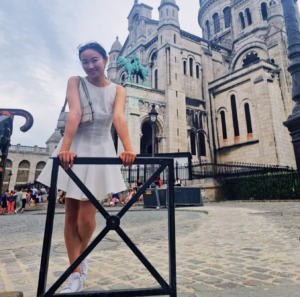
After studying Economics at Tilburg University and building a career in banking and investment, she spent years analyzing companies and business models. Today, she is the founder of ViWear , an AI-powered virtual try-on and wardrobe management app that helps users explore outfits, organize their wardrobe, and discover new styles.
The idea behind ViWear has surprisingly simple roots.
As a child, Yiran loved online dress-up games. While many saw them as entertainment, she saw them as a way of imagining the future. Through clothing and styling, she could picture herself going on dates, attending concerts, or working in a professional environment.
“I was never really a fashion girl,” she says. “I studied economics, was considered quite nerdy, and sometimes wore the same jacket for most of the semester.”
Yet fashion offered something powerful: a way to explore confidence, identity, and aspiration.
Years later, she found herself asking a simple question: why can we dress up fictional characters online, but not ourselves?
That question eventually became ViWear .
The arrival of generative AI made the idea possible. When Yiran first explored the technology in 2024, the results were far from perfect. Virtual try-on tools struggled with garment details and realistic results. However, the speed of improvement convinced her that AI would soon become a practical solution.
Building an AI company without a technical background came with challenges, but Yiran focused on understanding the technology well enough to make informed decisions and work effectively with technical teams.
“I do not need to write every line of code,” she explains, “but I do need to understand the technology well enough to set the right direction.”
Today, AI helps power several features within ViWear. Users can upload a photo and see how different clothing items may look on them, while AI also helps organize their digital wardrobe by automatically categorizing uploaded items.
Beyond the product itself, AI has transformed the way Yiran works as an entrepreneur.
“It has made me faster at moving from an idea to a structured first version,” she says. “The cost of creating a first draft has fallen dramatically.”
At the same time, she believes human judgement remains essential. While AI can generate content and ideas quickly, understanding customers, making decisions, and solving meaningful problems still require human insight.
Looking ahead, Yiran expects AI to make fashion experiences increasingly personal, helping users discover outfits that reflect their style, preferences, and lifestyle. More broadly, she believes the future of work will place even greater value on creativity, communication, empathy, and critical thinking.
For aspiring founders, her advice is simple: start experimenting.
“You don’t need to understand everything before you begin. By using AI, you learn where it creates real value, where human judgement is still essential, and where there may be opportunities to build something better.”
What began as a childhood fascination with dress-up games has evolved into a business that uses AI to help people explore style, build confidence, and express themselves in new ways. A reminder that sometimes the best startup ideas come from the questions we’ve been asking ourselves all along.