
Dieuwke Hoogland on how and why she founded Female Ventures
To mark the tenth anniversary of Female Ventures, we sat down with founder Dieuwke Hoogland to find out how it all started, the biggest challenges she faced along the way, and whether the mission that drove her in 2016 still applies today.
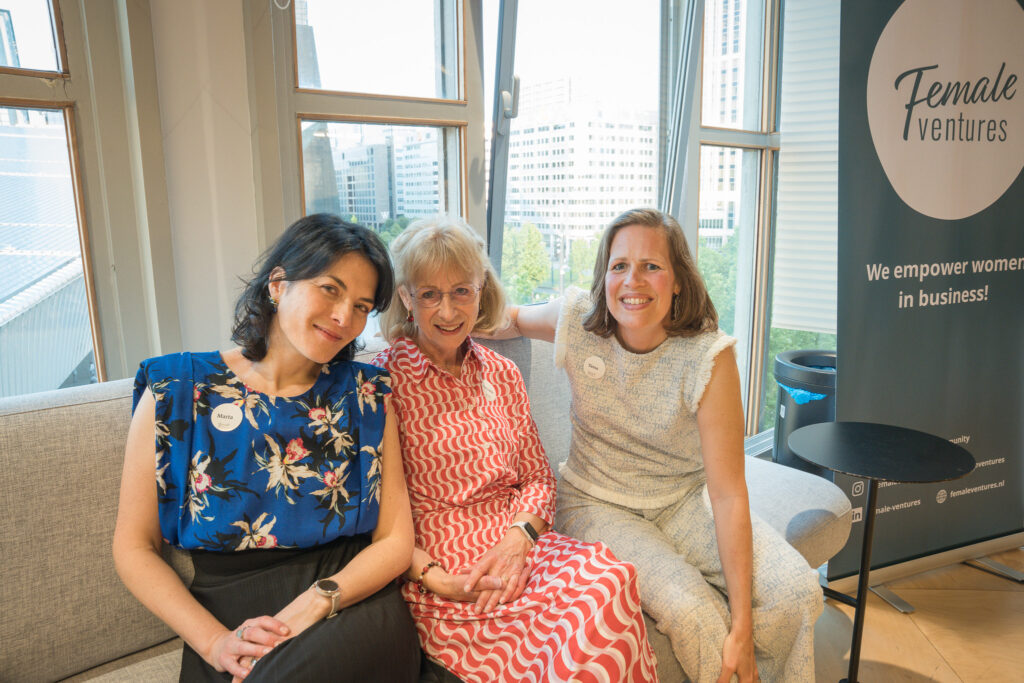
Take us back to March 2016. What was going on in your life and work that made you think: “I need to start Female Ventures”?
I was 55 at the time, an age when you’re considered to be in the final phase of your career. I was working with the Cambridge Innovation Centre and the City of Rotterdam on an initiative called Venture Café, building a community for innovators. What I noticed was that while the events attracted many great people, they hadn’t attracted many women. I started to wonder: why don’t women come to these meetings?
I discussed this with the few women at the Venture Café, and we decided to organise something specifically for women. Our first event was so crowded, it was a bit of a shock to me. All we had done was invite a few speakers to share their careers and challenges — and it was immediately fully booked. People often ask me whether I had a plan, but the truth is that Female Ventures happened more or less by accident. From the very first event, I felt the eagerness in the room to support one another and grow. Participants kept asking: “When is the next one?” The community was already looking for Female Ventures, or something like it.
From the very first event, I felt the eagerness in the room to support one another and grow.
Building something that lasts almost always involves a crisis moment. What kept you going when things got challenging?
There were quite a few moments when Female Ventures kept me awake, moments when I thought: “This is over.” But my career has always been about building startups, and you can’t do that without resilience: knowing that there is a solution and an opportunity in every challenge. As Reid Hoffman says: “Starting a company is like jumping off a cliff and assembling a plane on the way down.” In that sense, Female Ventures hasn’t been different from building a startup. The difference is that we did it without a paid team — only volunteers.
Female Ventures has grown to five cities and over 60 volunteers, all without paid staff. What is the secret to making a volunteer-driven organisation sustainable for a decade?
I’d say there are two secrets: make the organisation financially and otherwise independent, and look after your volunteers.
I have seen many initiatives where the founder is the brand. I didn’t think that was a sustainable model. Financial independence, not depending on subsidies or grants, is also an important way to build a sustainable and neutral organisation. Independence is essential.
The second thing is to remember that volunteers are your power, your motor. Keeping volunteers engaged is all about motivation, culture, and non-monetary compensation. I used to interview every volunteer myself, and I always asked: why do you want to join, and what do you want to get out of it? It might be new experiences, new competencies, a stronger network. I wanted volunteers to feel empowered beyond their initial motivation to join, to feel individually recognised for their time and energy. That, I believe, is what keeps a volunteer community inspired and connected over time.
Volunteers are your power, your motor.
If you could go back and give your 2016 self one piece of advice, what would it be?
I have to laugh at this question. At Female Ventures, we want to empower women and help them build self-confidence — and the same has been true for me. My own confidence has grown enormously over these ten years.
I came from a career where I had always worked alongside my husband, Duke Urbanik. We built companies together, sometimes with other co-founders, but he was always at the front — the face and the brand. I worked behind the scenes on the financial and operational side. When I started Female Ventures, I had to step onto the stage myself. I couldn’t hide. And so, while our community members were learning to grow and feel empowered, I was doing the same.
While our community members learned to grow and feel empowered, I did too.
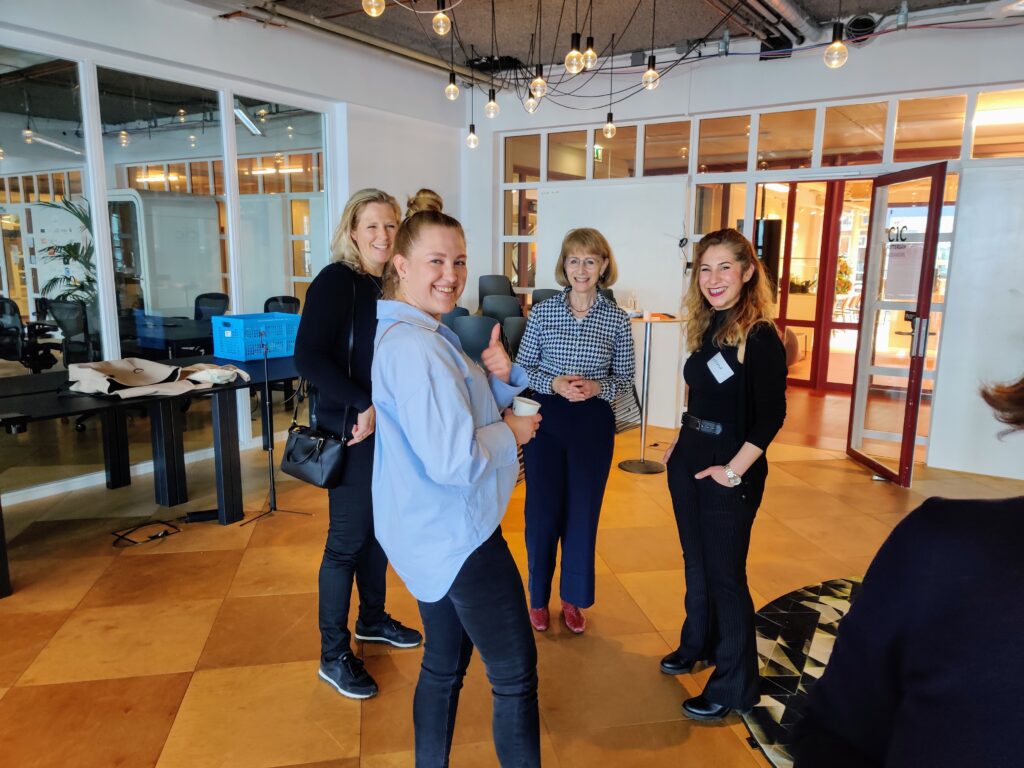
Female Ventures has always been professional and empowering, not pushy or activist. Was that a deliberate choice from the start?
Yes, and I still believe it was the right one. In the early days in Rotterdam, we sat down and asked: what do we actually want to build? We were determined not to create a space focused on complaining about unequal salaries or unfair treatment. We wanted to build something positive, a powerful group of women who support each other in building their careers.
From the beginning, we welcomed everyone, including male allies and attendees. That openness is reflected in our community today: we have women from Russia, Ukraine, Iran, and the United States. I’m proud of that. And we conduct everything in English, which makes it welcoming for international women who may not yet feel confident networking in Dutch. In the Dutch ecosystem of female empowerment, I believe that is one of our distinguishing strengths.
What is the achievement from the past ten years you are most proud of?
What we have built together — with all these volunteers, over all these years — is something that simply wasn’t there before. Female Ventures has made a real difference in women’s careers and in women’s lives.
I vividly remember an event in Delft where a young woman came up to me afterwards and said: “I think this evening has changed my life.” It sounds enormous, but when you think about the power of hearing from a role model at the right moment, it can genuinely change something: how you think, the choices you make, the path you take. You don’t know what you don’t know. Hearing that from even one woman makes it all worthwhile.
We can learn so much from each other.
How have male allies contributed to Female Ventures, and how do you see their role developing?
This is a question I find genuinely difficult. My own most important male ally has been my husband, who supported Female Ventures from the beginning, especially in the early days when there was no budget: he would drive me between cities with our one banner in the back of the car.
But the broader question of male allyship is complex. I once spoke with someone at an event who said: “Dieuwke, I don’t like what you’re doing. I’m a 50-something white man and it feels like the message is that men are the cause of everything bad.” For me, the answer lies in finding the right balance. We have always welcomed male attendees, and the men who do come are a specific group — people who already have an eye on diversity and want to learn how to work better alongside women. But we should never be about blame. Diversity is a difficult, important topic, and the way we discuss it matters.
Looking ahead: what does Female Ventures need to become in the next ten years for you to feel the mission is truly accomplished?
When we started, we deliberately chose not to set KPIs to measure impact. But that raises the question: how do we know when we’re successful? My answer is: as long as we are empowering and inspiring women to build meaningful careers, let’s continue.
One thing I am mindful of is the direction our community has taken. After COVID, Female Ventures became increasingly international, whereas the original intention was to bring together both Dutch and international women. When international women and local women connect, something powerful happens: we all gain a richer understanding of what it means to navigate Dutch business and Dutch culture. That cross-cultural exchange is one of the most valuable things Female Ventures can offer.
What we have built so far is something that was really needed: a place where women can come together, be themselves, grow, share, collaborate, and inspire one another. That is what we have built together. Let’s see what we can accomplish in the next ten years.
When international women connect with local women, we can all better understand what’s happening in our society, in Dutch businesses, and in our culture