
Redefining Womanhood
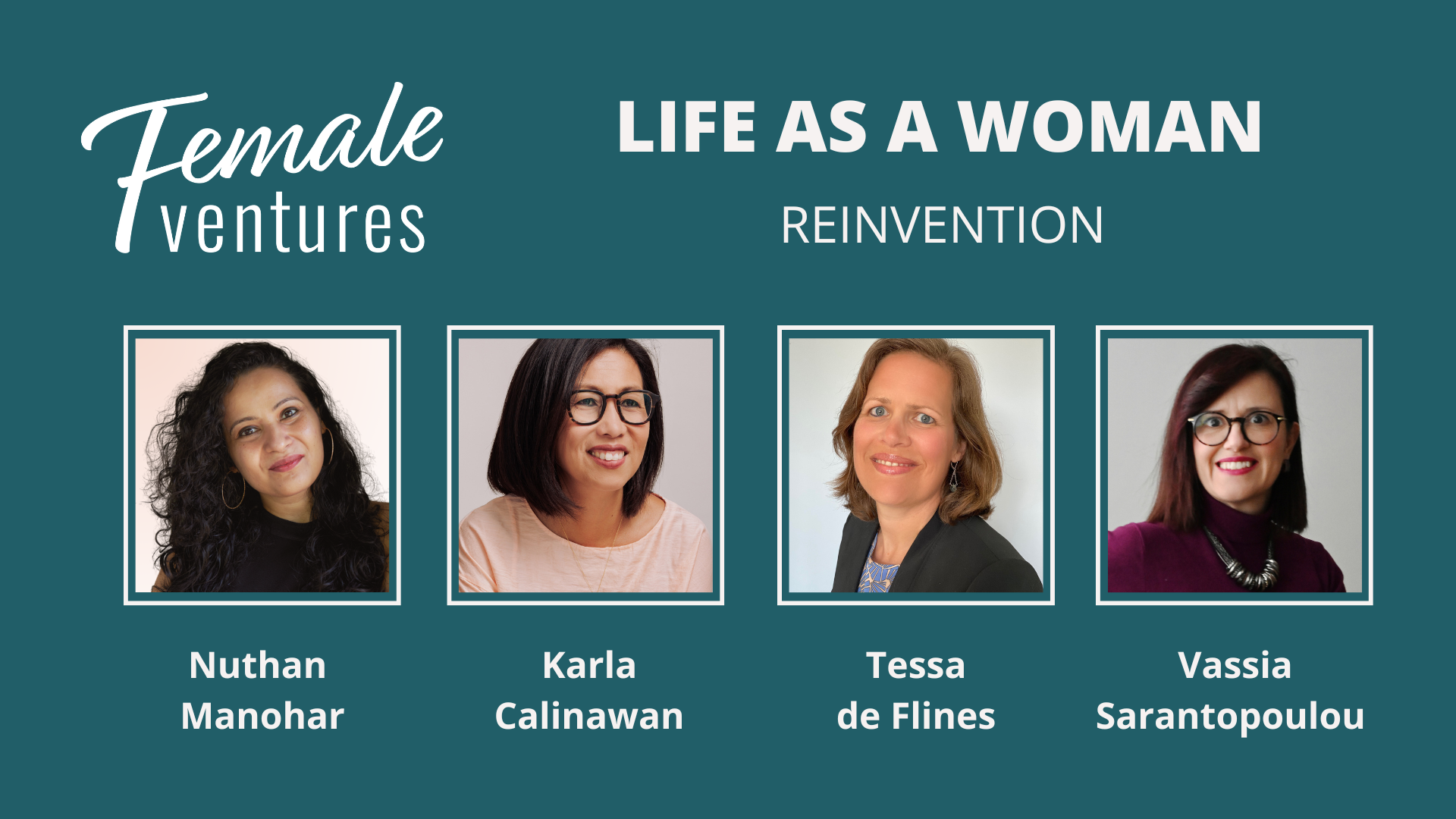
For Vassia, life as a woman has been a constant practice of shedding and reclaiming. “In the beginning,” she reflects, “I tried to fit into roles handed to me by society and family: wife, mother, daughter, friend. One by one, I began shedding them if they didn’t align with who I truly was. Reinventing these roles on my own terms was the only way to find joy and ownership.”
Nuthan’s journey, in contrast, began with suppression. Growing up in a conservative South Indian context, she recounts, “I hated being a woman… I cut my hair, wore boys’ clothes, walked and even fought like a boy. I believed this would keep me safe from further trauma.” It was only in her thirties that she embraced her feminine identity as a source of strength. “True power isn’t about hiding,” she says, “it’s about being seen and heard. Being a woman is not fragile, it is a source of immense power.”
For Karla, womanhood is a balance of paradoxes: strength and vulnerability, ambition and care, independence and community. Motherhood expanded her identity rather than erasing it. “If I were a house, the foundation remains,” she explains, “but new rooms are added, more windows opened. The view of the world becomes wider and richer.”
The Art of Reinvention
Reinvention, as the panelists emphasize, is less a single moment than a continuous practice. For Vassia, it means moving closer to her true self, uprooting inherited guilt and limiting beliefs. Burnout became her pivotal turning point, not just from overwork but from an ingrained inability to ask for help. “I had to learn rest, to reclaim my energy, to set boundaries,” she explains. In her Burnout Recovery program, she guides women through this delicate work, helping them release inherited burdens and embrace their own path.

For Tessa, reinvention is both professional and deeply personal. After years in corporate corridors, she found herself drawn to the messy, exhilarating world of startups. Her journey toward becoming a fractional COO, coupled with angel investing and DEI initiatives, was neither linear nor smooth. “It’s been a process of experimentation,” she reflects. “Small steps, asking for help, testing ideas, and following curiosity more than certainty. Each step reshaped what I thought I could do, and who I could be.”
Nuthan sees reinvention as an unveiling of the self. Her professional life had been comfortable, rooted in consultation and academic research, until she felt called toward social action. “I am peeling back layers,” she says, “to step into a new role as the founder of a foundation. This is more than a career change; it’s a homecoming to my purpose.”

Karla frames reinvention as evolution: a series of shifting perspectives, trying on new roles, and discovering capacities that were always present but unseen. Each reinvention feels like a renovation, some rooms updated, others still under construction.
Unlearning and Relearning

Bad advice, the speakers note, has been a persistent companion. Vassia recalls being told to excel at every role, to be hyper-independent, to never show struggle. Tessa was advised to perform perfectly to climb the ladder, but she learned that visibility and asking for help matter as much as performance. Karla challenges the myth of a single definition of success, urging women to craft their own paths beyond societal norms: “Ambition doesn’t look one way. You can step off the path society draws and define your own measures of achievement.”
Uncomfortable truths about reinvention are rarely discussed openly. Tessa highlights the effort required: her network grew over five years of consistent work. Karla warns that internal saboteurs will awaken. Vassia emphasizes the loneliness of transformation: “You often must go inward before going outward. Ask for support. Seek safe circles.”
Hustle, Balance, and Joy
Hustle culture is a frequent trap. Vassia calls chronic hustle a form of self-abuse, often rooted in early messages about worth and perfection. Even when all societal boxes are ticked, happiness may remain elusive. Reinvention, she suggests, is a return to curiosity, childlike wonder, and original joy.
Productivity, paradoxically, often comes when we slow down. A five-minute walk, an uncounted tea break, simple acts of presence become radical forms of self-care. Tessa and Karla note that while the Netherlands models healthier work-life boundaries, entrepreneurs must still protect their own time, practicing intentional pacing and self-compassion.
Funding the Future
The conversation also turned to structural barriers, particularly the massive funding gap for women founders. Tessa highlights the reality: only about 1% of investment reaches all-female founding teams, while 96% goes to male founders. Roughly 90% of investors are men. She urges a shift toward diversity in both founders and investors, and dispels the myth that investing requires multimillion-euro capital: even €2,500 can start a meaningful impact.
Turning Points and Support Systems
Turning points mark the path of reinvention. Tessa’s journey from corporate to startup support, angel investing, and DEI work spans eight years of experimentation and coaching. Vassia recounts a retinal detachment diagnosis that reshaped her perception and presence, a stark reminder of life’s fragility and the power of mindfulness.
Tessa emphasizes the labor behind growth: “Building a network, experimenting, and committing to learning, it takes sustained effort. It’s eight years of ups and downs before clarity begins to emerge.”
Support systems, they emphasize, are critical. Tessa transitioned from corporate mentors to entrepreneurial peers and partners. Karla underscores the necessity of defining roles in your support network. Vassia reflects on the vulnerability required to ask for help and shed guilt. Nuthan advises clarity about the help you need and courage to invite others into your journey.
“If you want to go fast, go alone,” says Vassia quoting a proverb. “If you want to go far, go together.”
The Power of Saying No
Boundaries are essential. Vassia encourages women to embrace the word no, even if it brings discomfort or disappointment. Self-commitments must take precedence, for they are the scaffolding on which reinvention is built. Burnout is a red flag, Vassia warns. “Stress becomes stress. When your body stops listening, it’s time to pause.”
Practical Takeaways
For those navigating their own journeys, the panelists shared actionable guidance:
- Identify a “room” in your life or work to renovate and define a single milestone.
- Schedule two guardrails for your time: one break ritual and one gatekeeping rule.
- Map your support system: peer, mentor, coach, and critical friend. Fill gaps consciously.
And for reflection: What belief about success needs unlearning? Where is perfection blocking joy? What commitment requires a clear no this month?
Embracing the Messy Middle
Reinvention is rarely linear or tidy. It is messy, iterative, and deeply personal. Yet the stories shared in this room—of courage, persistence, creativity, and community—remind us that no woman navigates it alone. Joy is rediscovered in curiosity, vulnerability, and human connection. Boundaries become tools of liberation. The path to authenticity winds through challenges, and each small step forward carries the promise of profound transformation.
As the event closed, the atmosphere lingered with a collective sense of possibility. Women rose, exchanged glances that acknowledged shared struggles, and carried with them the quiet assurance that reinvention is not just a solitary act—it is a shared art, shaped by courage, support, and the unwavering belief that becoming yourself is always worth the journey.
